Ed-Tech Infrastructure · Pretoria, SA · Building now

We didn't adapt
ed-tech for Africa.
We built it
from the inside.

Africa's universities lose more than half their students before graduation — not from a lack of intelligence, but a lack of infrastructure. OmnitechWorks is the correction.

0%
SA university students who never finish their degree
0K+
UNISA distance learners with no proper digital support
1 truth
Intelligence is distributed. Opportunity is not. We are the correction.
Our Mission

We start with an
uncomfortable truth.

"The African university system is not broken because of a shortage of intelligence. It is broken because of a shortage of infrastructure."

More than half of South African students who begin a university degree never finish it. This is the fact that drives every decision we make. Not because the number is large — but because every single one of those students had the capability to succeed, and the system quietly failed them before they got the chance.

Mobile-First Offline-Capable South African Context AI Infrastructure Data-Light Built From Within
The scale of the crisis
55%
University dropout rate in South Africa
More than half of enrolled university students never graduate. This is not an anomaly — it is the norm, and it has been for decades. The cause is not ability. It is the absence of support infrastructure at the right moment.
400K+
UNISA distance learners studying in isolation
The University of South Africa enrols over 400,000 students — one of the largest universities on earth. The majority study completely alone, without tutors, without study groups, without tools built for their reality.
R1.4B
Estimated annual economic cost of student dropout
In lost human capital, wasted NSFAS government spend, and a workforce that never reaches its potential. The cost of student failure is not just personal — it is national. And it is correctable.
Who we build for
👩🏾‍🎓
The Working Student
She works weekends to pay her registration fees. She commutes two hours each way. She gets home at 9pm and opens her textbooks — but there's nobody to ask when she gets stuck at midnight. She is not struggling because she isn't smart. She is struggling because the system was never designed for someone like her.
👨🏿‍💻
The First-Generation Student
He is the first in his family to attend university. Everything he does carries the weight of everyone who came before him. He cannot afford a tutor. He has no one in his network who has navigated this before. He needs a system that meets him exactly where he is — on a smartphone, at 11pm, during load-shedding.
👩🏽‍🔬
The Science & Engineering Student
She is studying mechanical engineering. The maths is intense, the support is thin. Every ed-tech product she finds either doesn't render equations, doesn't work on her data plan, or was built for students in the US or UK. She needs something built for her — and it didn't exist until now.
Our story in three chapters
01
Our Belief

Intelligence is uniformly distributed.
Opportunity is not.

We did not arrive here from a Silicon Valley accelerator with a solution looking for a problem. We are from here. We understand the structural realities of South African academic life in a way that no outside observer ever could. The data costs. The load-shedding. The institutional gaps. The mathematics barrier that nobody talks about openly.

OmnitechWorks was built from a ground-level understanding of what South African students actually face — and from a deep conviction that their failure is not inevitable. It is correctable, with the right infrastructure in the right place at the right time.

"We didn't arrive from Silicon Valley with a solution looking for a problem. We are from here — and that changes everything about how we build."
02
Our Method

We are not a content company.
We are an infrastructure company.

The distinction matters enormously. Content companies produce material — videos, articles, practice questions. Infrastructure companies build the systems that make everything else possible. What OmnitechWorks builds doesn't just deliver information. It changes how students relate to their own learning over time.

Every product decision is filtered through a single question: does this make it meaningfully easier for a South African student to understand, retain, and apply what they have been taught? If the answer is no, we don't build it. If the answer is yes, we build it without compromise — offline capability, low-data mode, mobile-first architecture, and maths rendering that actually works on a mid-range smartphone.

That means no laptops required. No stable Wi-Fi assumed. No data cost that makes a student choose between studying and eating.

03
Our Difference

A 14-person team with
zero passengers.

OmnitechWorks is structured differently from the beginning. A cross-functional team with defined ownership across technology, growth, legal, design, and institutional relations. We move with the decision-making speed of a startup and the operational discipline of something much larger.

The ed-tech sector has no shortage of good intentions. It has a significant shortage of products built by people who understand the context they are building for. OmnitechWorks has both — technical capability and lived understanding of the environment our users navigate every single day.

"The product is not adapted for Africa. It was born from it."
Our Vision

By 2030, no African student studies alone.

That is the north star. Not a marketing tagline — a measurable, deployable goal. Every product we build, every institutional partnership we sign, and every line of code we write is aimed at making that sentence true across the continent.

We are starting in South Africa because that is where we are from. But the infrastructure we are building is designed to scale across every country on the continent with a tertiary education system and a mobile internet network — which is most of them.

5+
Major SA universities in active engagement pipeline
90
Day free institutional pilot — no contract until results are seen
1M+
Students we intend to reach in our first major deployment cycle
0
Compromises on mobile-first, offline-capable product requirements
braintiq
Flagship Product · Live Now

The most complete AI academic
platform on the continent.

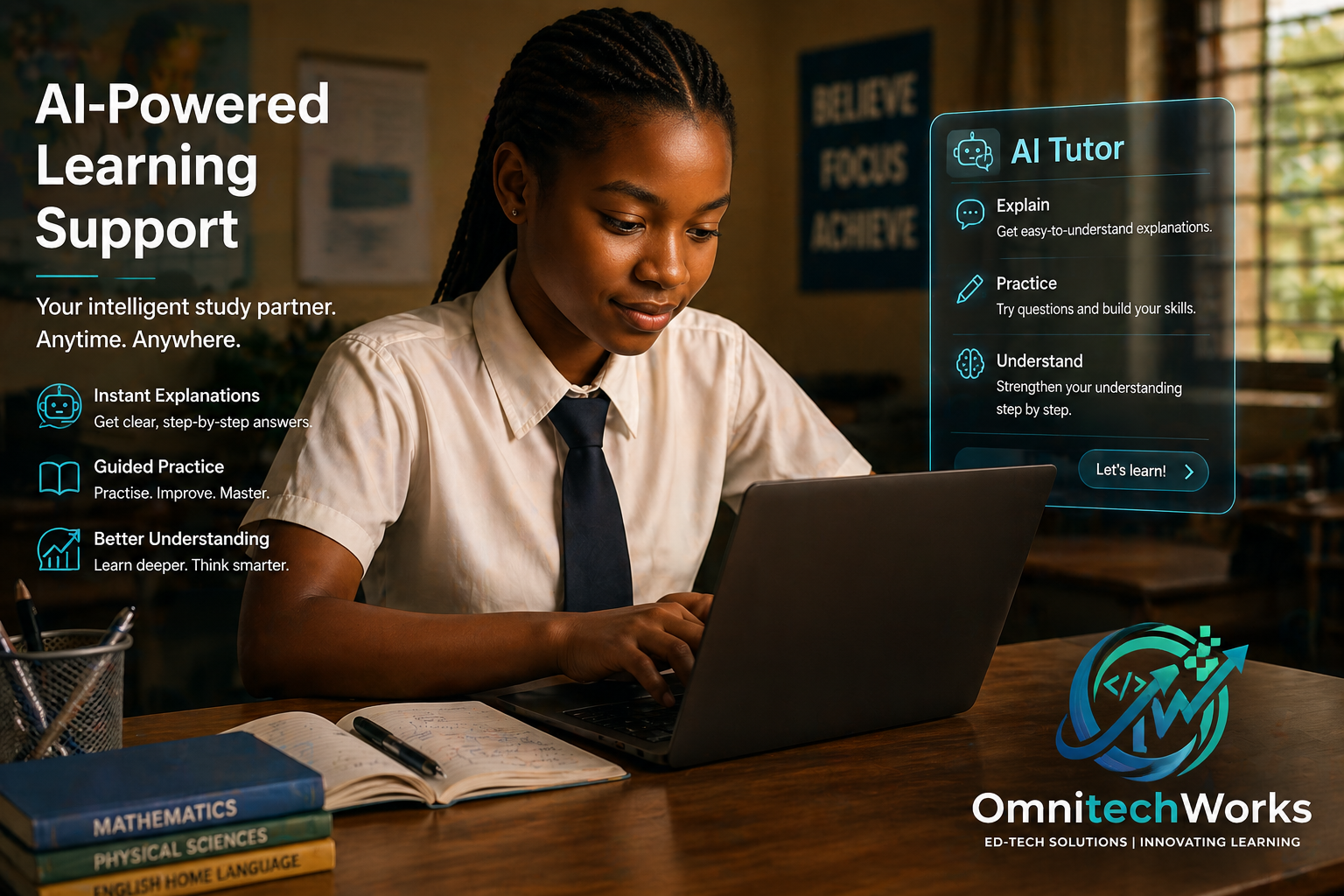
Eleven integrated systems. One platform. Built for South African students — mobile-first, offline AI-capable, and powered by an adaptive engine that routes every query to the right intelligence automatically.

● Live — Available on Any Device Right Now

Braintiq is not a study app.
It is a complete academic environment.

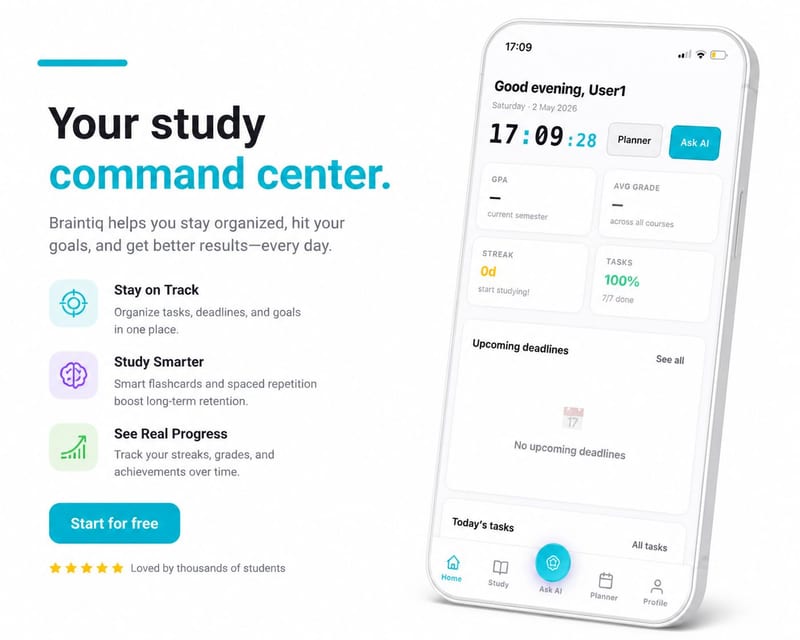
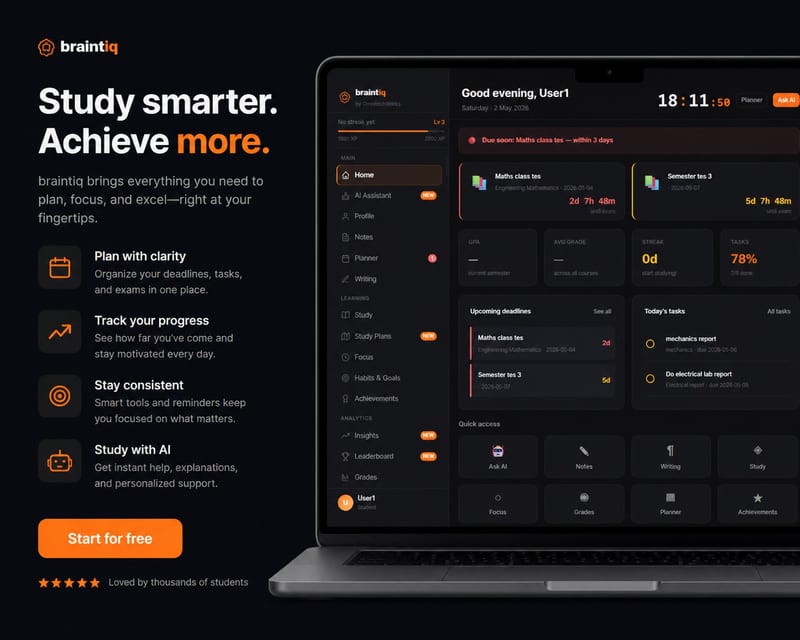
Most ed-tech products are single-function tools — a flashcard app, a tutoring chatbot, a habit tracker. Braintiq is different. It is a fully integrated academic ecosystem where eight systems work together to understand how a student learns, adapt to their weaknesses, and build the habits and knowledge structures that lead to consistent academic performance over time.

Built specifically for the South African student: mobile-first, data-light, offline-capable, with full mathematical notation support for the engineering, science, and commerce students that every other platform ignores.

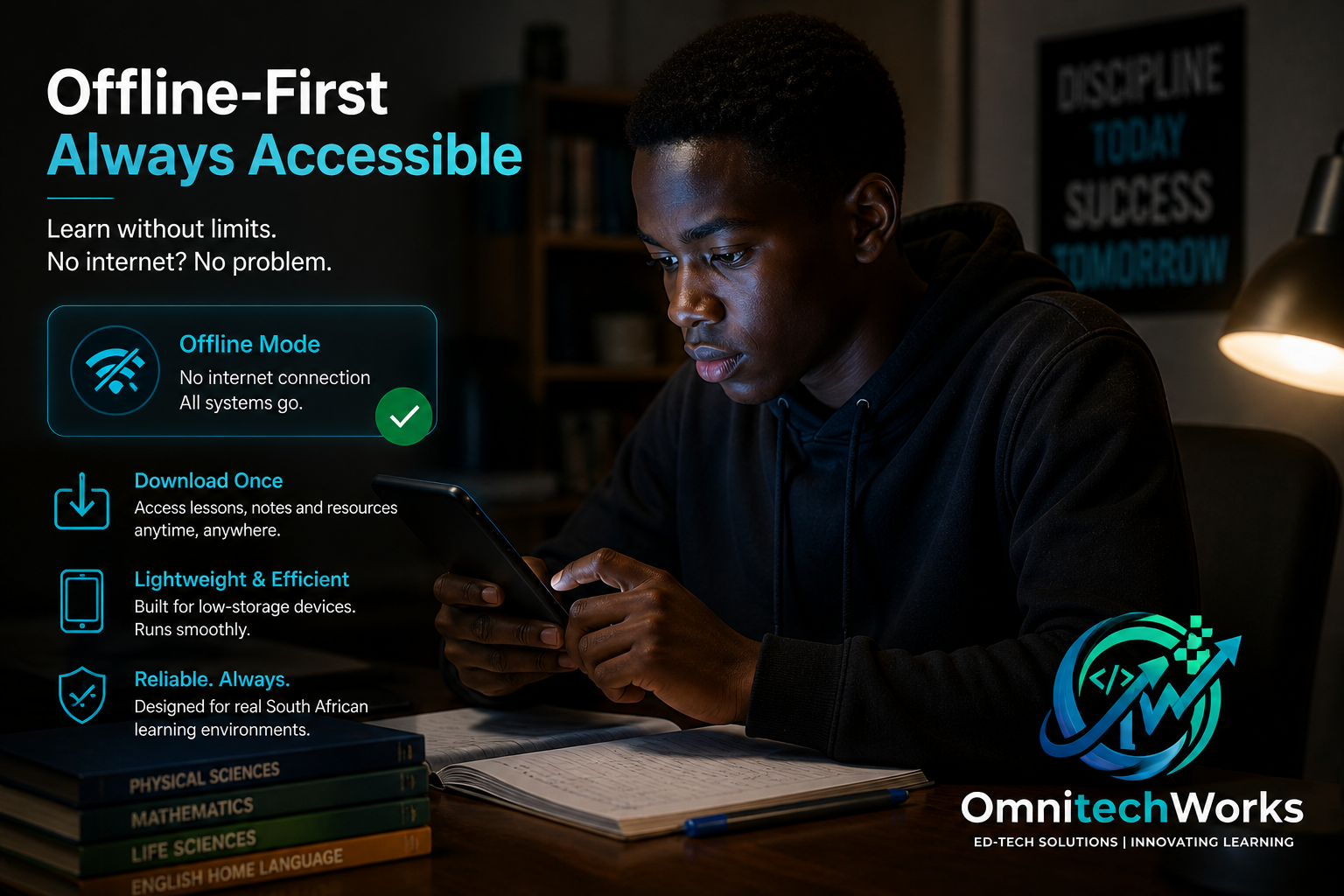
  • Works on any Android or iOS device — no app store download required
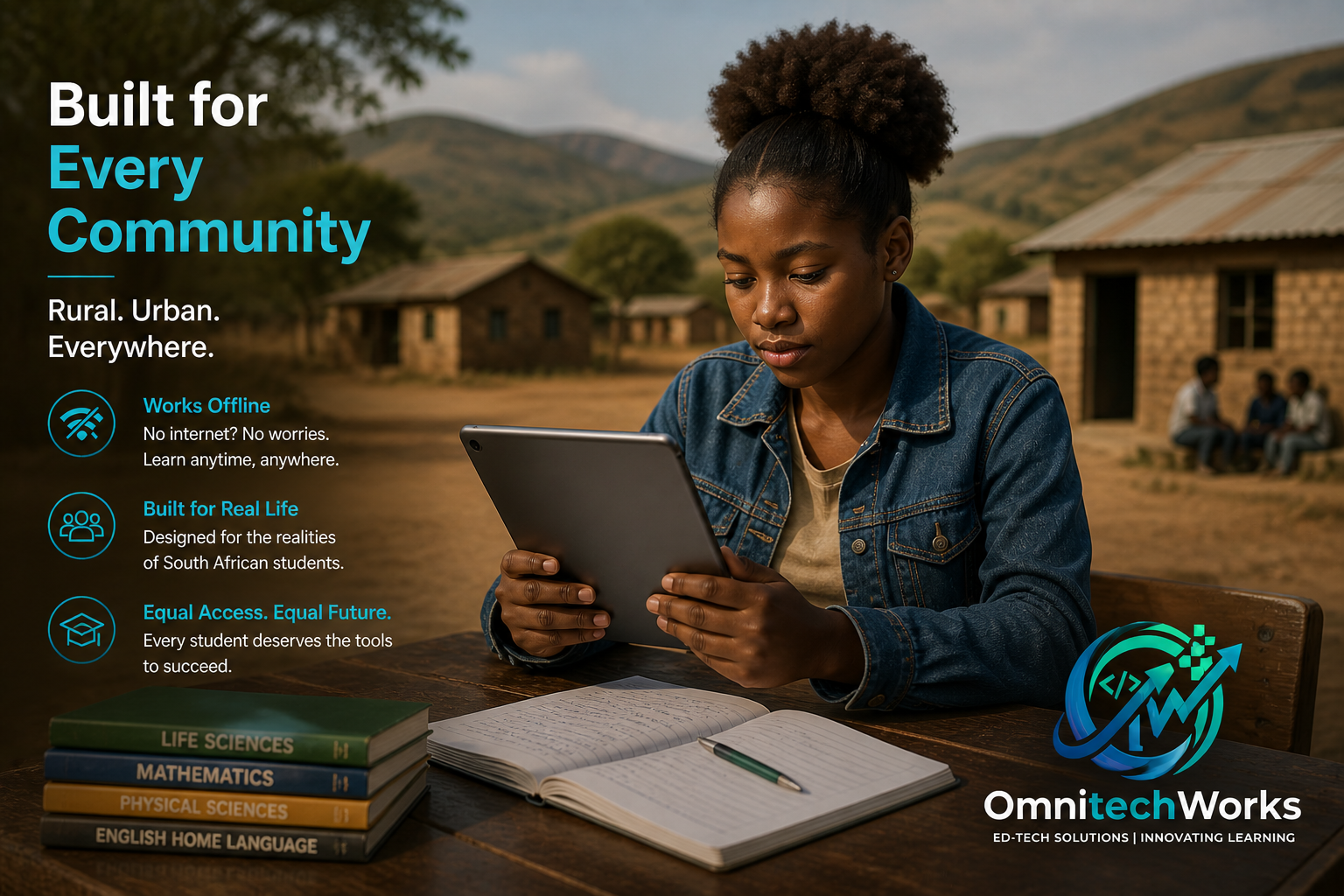
  • Functions offline through load-shedding and low-connectivity environments
  • Full KaTeX maths rendering — calculus, linear algebra, statistics, physics
  • AI that remembers how you learn and adapts in real time to your gaps
  • Built by a South African team that understands this context from the inside
Why Braintiq works

The platform was designed around a fundamental insight: students don't fail because they aren't intelligent — they fail because the support disappears exactly when they need it most. At 11pm. During load-shedding. On a taxi with no Wi-Fi. In a residence room without a study group.

Braintiq fills every one of those gaps simultaneously. The AI tutor is available at midnight. The spaced repetition engine works offline. The maths renderer works on a R2000 Android. The gamification keeps students coming back tomorrow.

That is not an accident — it is the result of building from within the context, rather than adapting for it.

01
🧠
Streaming AI Tutoring
Real-time, context-aware AI available at any hour. Understands your subject area, remembers previous questions, and adapts explanations to how you learn. Not generic — personalised to you.
02
🔁
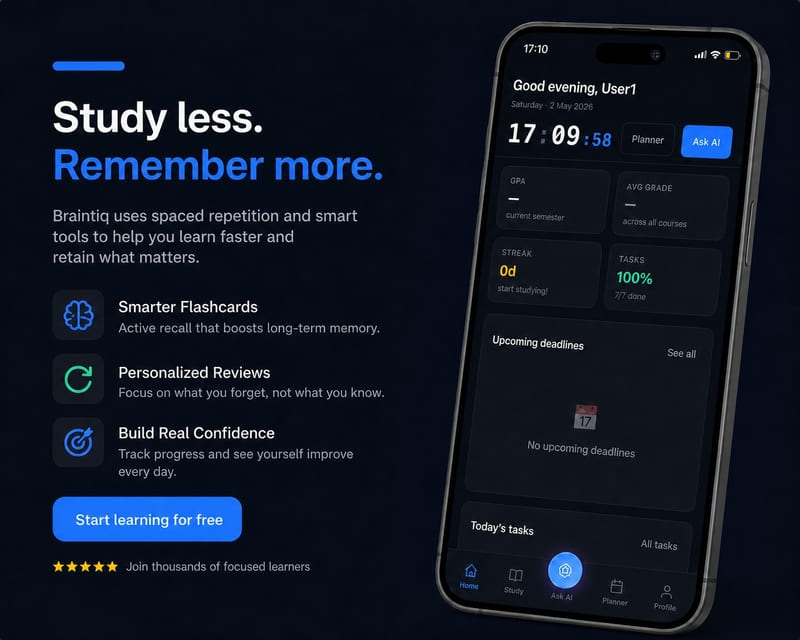
Spaced Repetition Engine
SM-2 algorithm flashcards that schedule each concept for review at precisely the right moment — just before you'd forget it. Encodes knowledge into long-term memory, not just short-term exam prep.
03
KaTeX Maths Rendering
Full mathematical notation — calculus, statistics, linear algebra, chemistry, physics. Rendered beautifully on any screen. The feature every African science and engineering student has been waiting for.
04
📱
Offline-Capable PWA
Progressive Web App — installs from the browser, no app store needed. Continues to function through load-shedding and dropped connections. Built for the real South African environment, not an idealised one.
05
Pomodoro Focus System
Structured study intervals with calibrated breaks. Tracks focus sessions, detects fatigue patterns, and adjusts recommendations based on your own performance data over time. A focus coach, not just a timer.
06
📊
Habit & Progress Tracking
Dashboards that make your study patterns visible. Track daily streaks, time-on-task per subject, flashcard mastery rates, and AI conversation depth. When students can see their patterns, they change them.
07
🏆
Gamification Engine
Streaks, milestones, mastery badges, and progress unlocks. Designed to create the psychological conditions under which students naturally build long-term study habits — not addictive for its own sake.
08
📋
Project Management Suite
Full semester planning: assignment trackers, deadline management, module progress views, submission calendars. Turns reactive studying into proactive planning across an entire academic year.
09
🗣
Natural Language Pipeline
Understands how you actually phrase questions — not just keywords. Semantic intent extraction identifies subject area, difficulty, and context before routing to the right model response. Speak naturally; Braintiq understands.
10
🔀
Adaptive Router Engine
Braintiq doesn't use a single AI model — it decides which engine is best for your query in real time. Subject type, device capability, and connectivity all inform the routing decision. The right intelligence, every time, without you ever choosing.
11
🧠
Offline AI Engine
AI that works without the internet. When connectivity drops, Braintiq switches to an on-device intelligence layer — no cloud, no data, no signal required. Study through load-shedding. Study on a taxi. Study anywhere.
Get Early Access — Free While It Lasts ↗

Free for early users only · Works on any device · No download needed

Under the hood

Built on technology that respects the environment it operates in.

Braintiq was not built with the assumption of high bandwidth, a laptop, and a stable power supply. It was architected around the actual constraints South African students face — and performs better in every environment because of it.

The AI layer is multi-engine — an Adaptive Router determines in real time whether a query is handled in the cloud or on-device, based on subject complexity, connectivity, and device capability. When offline, a dedicated on-device AI engine takes over with no interruption to the student.

Cloud AI uses retrieval-augmented generation to reduce errors. On-device AI runs locally with no data leaving the device. The spaced repetition uses SM-2, modified for the South African academic calendar.

Progressive Web App KaTeX / LaTeX Adaptive Router Engine Offline AI Engine SM-2 Algorithm Service Worker IndexedDB Natural Language Pipeline Data-Light Mode
  • 🔀
    Adaptive Router Engine
    Every AI query is evaluated in real time and routed to the most appropriate engine. The decision is invisible to the user — responses feel seamless whether you're on Wi-Fi or fully offline.
  • 🧠
    Offline AI Engine
    A dedicated on-device intelligence layer activates when connectivity drops. AI tutoring, explanations, and academic support continue working with no internet connection — nothing leaves your device.
  • Load-shedding resilience
    Service worker caching means Braintiq continues to function during power outages and network drops. Core features are available offline once loaded.
  • 📡
    Data-light architecture
    Built for South African mobile data realities. AI streaming is batched intelligently, assets are aggressively cached, and the app loads on 2G connections.
  • 🔐
    POPIA-compliant data handling
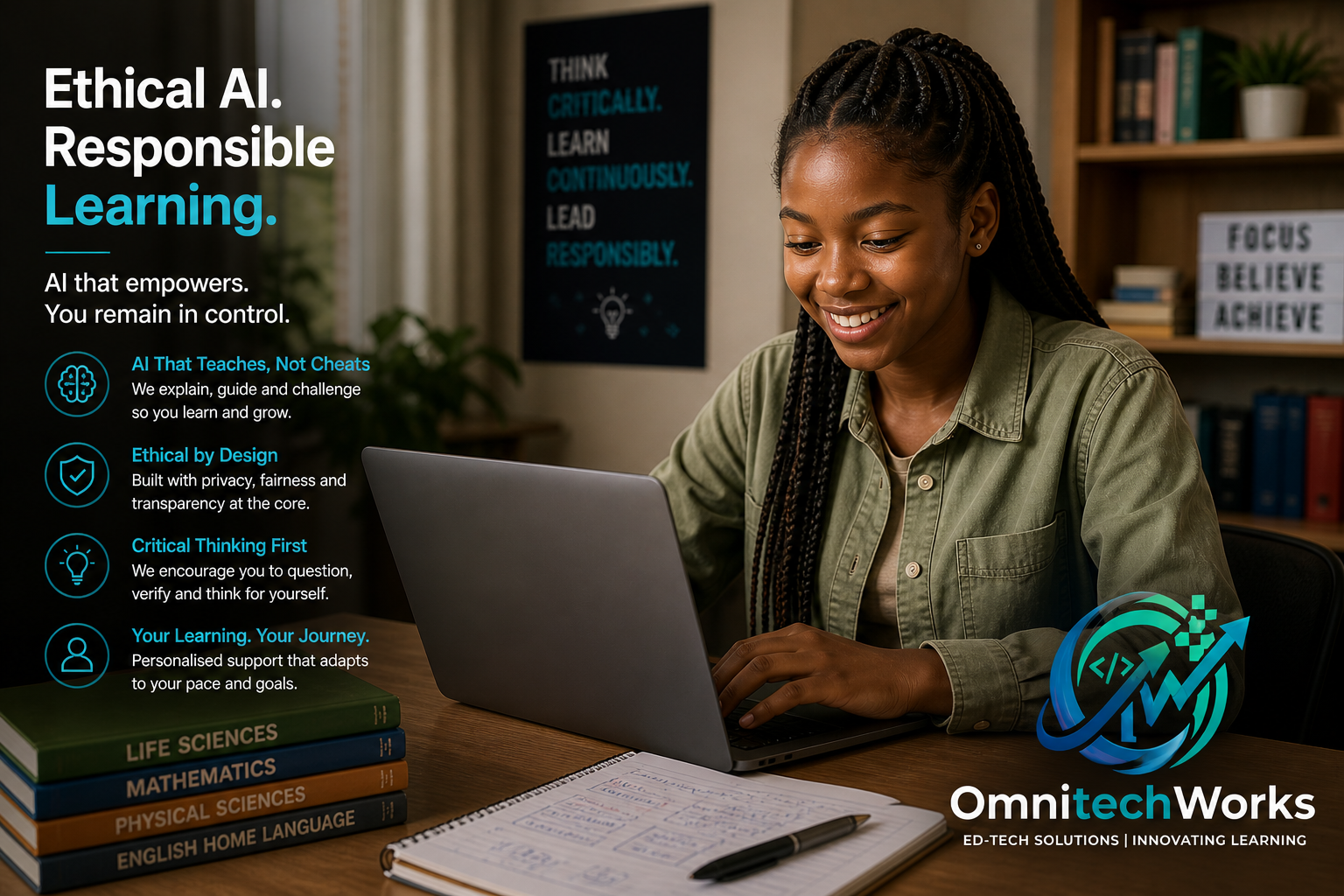
    Student data is processed per the Protection of Personal Information Act. No student data is used for training without explicit consent.
  • 🧩
    Institutional API layer
    Universities can integrate Braintiq with existing LMS systems including Moodle and Blackboard — bidirectional data flow without duplication.
Product Pipeline

Braintiq is first of many.

We are building an ecosystem, not a single product. Each future product deepens the infrastructure layer for African academic life.

02
Institutional Dashboard

Real-time student engagement analytics for university administrators. Retention risk signals, cohort performance trends, and intervention triggers — before students drop out, not after.

In Development
03
Peer Learning Network

Structured, AI-facilitated peer-to-peer study groups matched by module, skill gap, and study schedule. Closing the gap between formal instruction and individual understanding through community.

Research Phase
04
Career Pathways

AI-guided career exploration anchored in South African graduate employment data and industry demand signals. Helping students understand not just what they're studying — but exactly where it leads.

Research Phase
How it works

From first visit to lasting impact.

01
Student opens Braintiq in their browser
No app store. No download. Students visit braintiq.app on any device and can begin immediately. The PWA installs silently in the background. First meaningful interaction under 2 minutes from first visit.
02
The platform learns who they are
Braintiq maps subjects, identifies knowledge gaps through diagnostic AI interactions, and builds a personalised study profile. Within a week, the platform knows the student's weak points better than they do themselves.
03
Institution sees measurable impact
Engagement data flows to the institutional dashboard. Administrators see retention risk signals, high-confusion modules, and intervention opportunities — before students drop out, not after.
Target Institutions

Where the impact
matters most.

Selected by one criterion: where is the student support gap most consequential, and where does scale of impact justify speed of engagement? Our free 90-day pilot means institutions evaluate impact before any contract is signed.

University of Johannesburg
Large urban population, tech-forward administration, diverse faculty. First-mover opportunity for a Pretoria-based partnership with significant amplification potential.
Priority
University of the Witwatersrand
High engagement culture and strong research community credibility. A Wits partnership signals academic legitimacy that accelerates adoption at other institutions.
Priority
University of Pretoria
Strong engineering, science, and commerce faculties — precisely where KaTeX rendering and AI tutoring land with maximum relevance. Large first-generation enrolment.
Priority
University of Cape Town
International profile and influential alumni network. Active outreach in progress with student affairs department.
Active Outreach
UNISA
400,000+ distance learners. Digital-first by nature. The scale opportunity is unlike any other single institution in the country — and the student support gap is the widest.
Scale Play
TVET Colleges
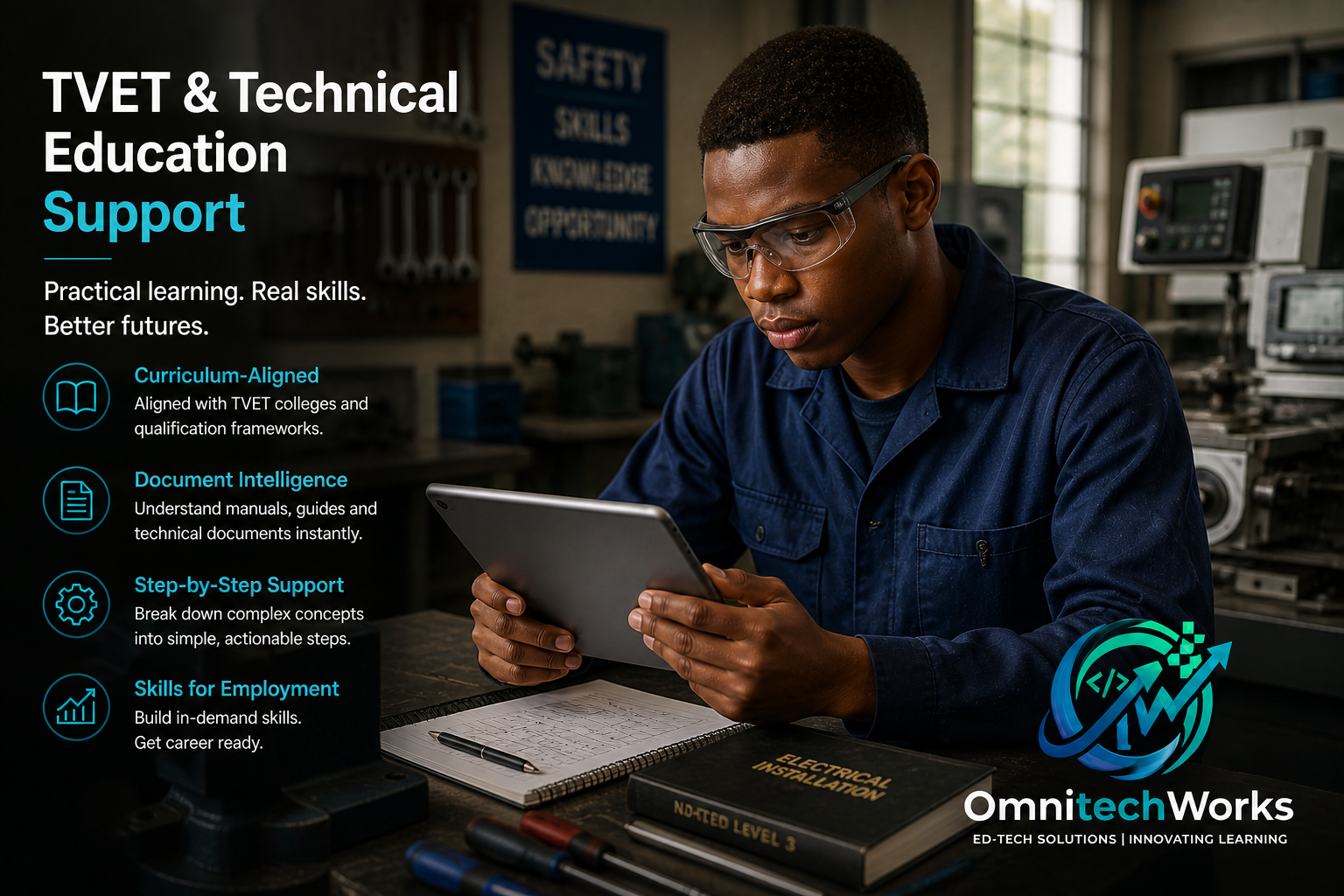
Chronically underserved mobile-first students with access to government budget streams. Strategically significant for national impact. Our maths rendering alone is a category-defining improvement for technical students.
Pipeline
Get in Touch

The conversation starts
with a single message.

Whether you represent a university procurement office, a student affairs department, an investor looking at ed-tech infrastructure in emerging markets, or a student with a question — we respond to every genuine enquiry.

For institutions: we offer a free 90-day pilot with full Braintiq access, dedicated onboarding, and impact reporting. No contract until you have seen the results.

For investors: we are building for a market with 400,000+ immediate addressable users, institutional licensing economics, and a problem with a measurable national cost. The conversation is worth having.

General Enquiries
Headquartered
Pretoria, South Africa